
Thursday, October 29, 2015
Current Event 10/29 - Shark Fin Soup
In China, a new advertising campaign has had incredible success in its efforts to remove shark fin soup from people's diets. Yao Ming, former NBA basketball player, and native of China, has been active in making Chinese people realize the harm associated with shark fin soup. He is a very well respected figure in China and has managed to reach out to most of country. According to a research survey conducted by iResearch, 82 percent of respondents said they would remove shark fin soup from their diets. One of the main ideas behind Yao's awareness campaigns is the slogan "when the buying stops, the killing can too." I like the idea behind this tactic because it directly is talking to consumers rather than try to get the issue regulated through government action. Since the ads featuring Ming were first aired on television, prices for shark fin has fallen by 57 percent in one of China's biggest fishing hubs. One of the particularly shocking things about this whole issue is that a 2006 survey found that 75 percent of Chinese people didn't know that shark fin soup, which directly translates to "fish-wing soup", even came from sharks. I think with more education on the topic, the Chinese population could have made an informed decision about the ecological impacts of the meal and whether or not to include it in their diets. This story really goes to show that people are willing to make a change in their lifestyle if they can directly connect themselves with an environmental issue, it also helps if you have an international superstar on your advertising team, but you get the point.

Monday, October 26, 2015
Ecological Footprint Assessment 10/26
So far I've given a strong effort in following my goals to reduce my impact on the environment. I have been able to go two meatless days a week fairly easy, and in some instances, I've been able to go three-four days a week without meat. It certainly helps that I am currently lacking paid employment, if I had more money to spend on groceries, it would be easier to pay for expensive meat products. That being said, I have had a little trouble buying locally sourced, organic produce and meat products, typically because the products are accompanied by a higher price tag. I am doing the best I can with my financial restrictions! I've been staying true to my third EF goal, carpooling to the river every time I go out fly fishing. It has been fairly easy since most of my buddies are just as into the sport as myself, and are always willing to get out and achieve some river therapy! I would like to stick with my three goals and add a fourth. The three goals I have now are achievable and certainly make a difference in my personal impact and earth requirements. The fourth goal I'd like to add is to turn off power strips or at least unplug all unused electronics and appliances. I pay the bills at my apartment, so it will be easy for me to see direct results in how much money were saving on ghost power. We have a lot of electronics (speakers, tv, xbox, etc.) in our living room so the simple power strip would work really well for that energy hub. I'm excited to see the savings on our energy bill and hopefully this is a lifestyle adjustment that I can pass on to my roommates and friends/family.
Thursday, October 15, 2015
Current Event 10/15- Nestle Water
In the midst of a historic and record-setting drought in the state of California, Nestle, a water bottle production company, has been allowed to remove as much water from the San Bernardino National Forest as they damn please. This isn't even a recent development. Nestle has been piping out upwards of 28 million gallons of fresh water a year. All of this precious commodity is going to be bottled as Nestle's Arrowhead brand and sold to the very same consumers who are being asked to reduce their water consumption at a residential level. This isn't just public shaming of a poorly conducted company. The Forest Service released this press brief within the last 48 hours:
"The story of Stuff Project, the California-based Courage Capaign Institute, and the Center for Biological Diversity filed a lawsuit this week against the U.S. Forest Service for allowing Nestle to continue to bottle millions of gallons of water from the San Bernardino National Forest with a permit that expired 27 years ago."
That's right. Nestle has been allowed to pipe all this water with an expired permit. Luckily, some interest groups are stepping in and getting the courts involved. The permit expired in 1988 but the piping infrastructure Nestle uses to acquire the freshwater has been active ever since, pumping about 70,000 gallons of freshwater a day. This has all been so morally accomplished (sarcasm) by Nestle utilizing a unique arrangement with the Forest Service. Nestle has to pay an annual fee of $524. I can't imagine how Nestle's accounting and financial teams were able to come up with enough room to shell out $524 for millions of gallons of water. The lawsuit notes, this annual fee is less than the average Californians water bill.


It will be interesting to watch how this lawsuit unfolds. It seems like a very easy decision for the courts especially in the midst of such expansive droughts. Hopefully, Nestle will have to shut down their piping operation or at least pay an extreme amount to renew their permit.
http://theantimedia.org/forest-service-sued-to-stop-nestle-from-drawing-water-in-national-forest/
Wednesday, October 7, 2015
Written Assignment #2 - Personal Care Product
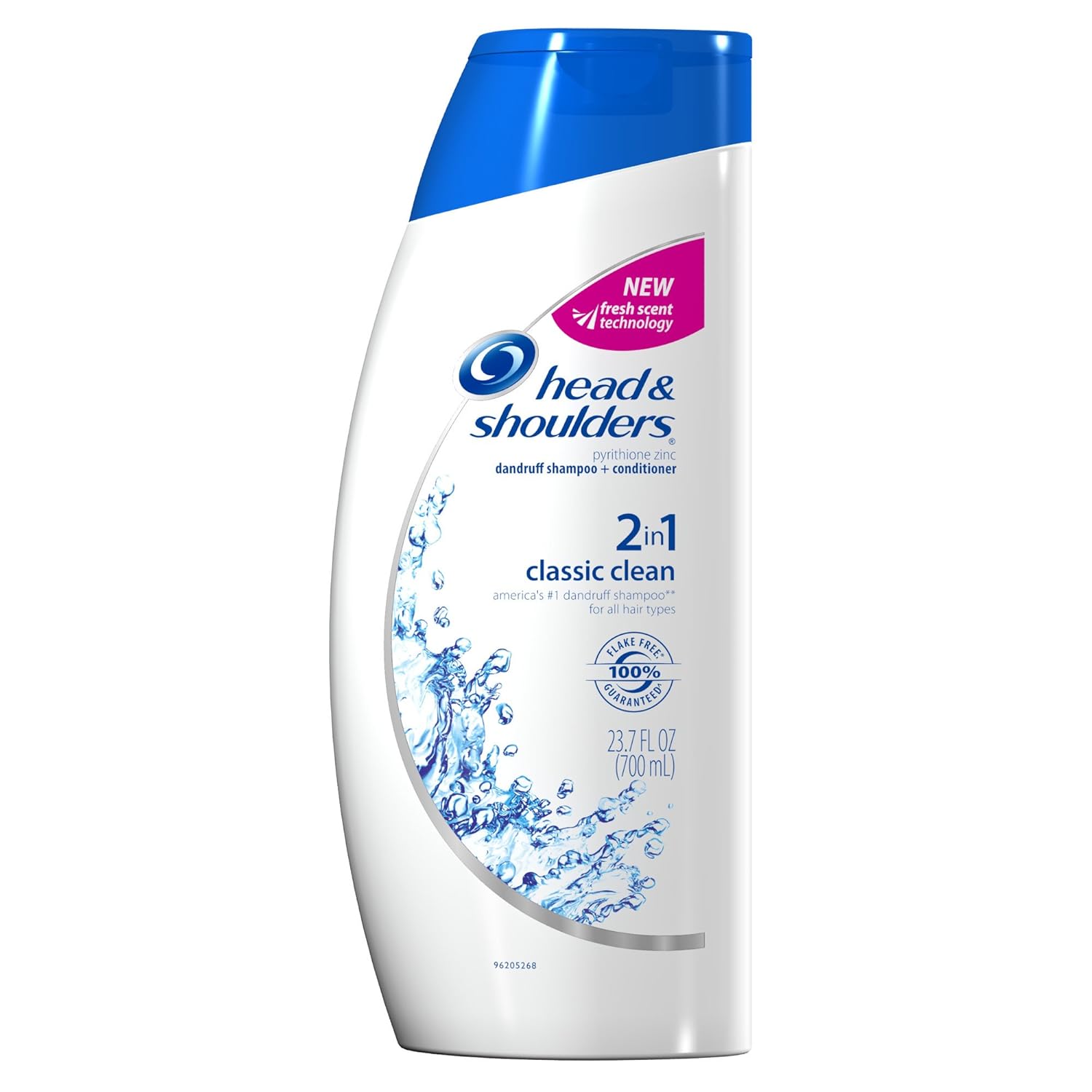
I chose to look at my shampoo Head & Shoulders Classic Clean 2-in-1

List of some of the high-toxicity ingredients:
List of some of the high-toxicity ingredients:
- Fragrance - High hazard. Ecotoxicology, allergies/immunotoxicity, irritant, organ system toxicity.
- Methylisothiazolinone - High hazard. Ecotoxicology, neurotoxicity.
- Methylchloroisothiazolinone - Moderate hazard. Cancer, ecotoxicology, irritant.
After doing some research, I found that methylchloroisothiazolinone is a preservative commonly used in cosmetics. Upon further investigation I found that the ingredient is also used in glue production,
detergents, paints, fuels, and other industrial processes. I found that pretty
disturbing considering I'm lathering this stuff into my hair almost everyday.
In the United States they have accepted concentrations of the ingredient for
personal care products, which makes me question if long-term use could result
in a build up of the chemical on or even in the skin. The most disturbing
aspect of this discovery is the fact that this is only one ingredient in a
single care product. I'm certain that most of my choices in personal care
products have ingredients I should be concerned about. On top of this, I
question the majority of my food products and other goods such as clothing or
bedding.
To be honest, I don't feel comfortable using this product in my daily hygiene routine anymore. Once I finish my current bottle of shampoo I will seek a substitute product with less harmful, or at least questionable, ingredients. After seeking out this information, and discovering the possible dangers of my everyday personal care products, I will be taking a look at the rest of my hygienic goods (body wash, face wash, tooth paste, deodorant, etc.) to determine what else I've been applying to my body everyday.
Citations:
http://www.ewg.org/skindeep/ingredient/703924/METHYLCHLOROISOTHIAZOLINONE/
http://orgs.dermis.net/content/e05eecdrg/e05news/e686/e706/index_ger.html
To be honest, I don't feel comfortable using this product in my daily hygiene routine anymore. Once I finish my current bottle of shampoo I will seek a substitute product with less harmful, or at least questionable, ingredients. After seeking out this information, and discovering the possible dangers of my everyday personal care products, I will be taking a look at the rest of my hygienic goods (body wash, face wash, tooth paste, deodorant, etc.) to determine what else I've been applying to my body everyday.
Citations:
http://www.ewg.org/skindeep/ingredient/703924/METHYLCHLOROISOTHIAZOLINONE/
http://orgs.dermis.net/content/e05eecdrg/e05news/e686/e706/index_ger.html
Current Event 10/7 - Water Valuation
http://www.greenbiz.com/article/water-being-underpriced
This article spells out the issues revolving around the undervaluation of the world's most required resource: water. By 2025, the United Nations have predicted that two-thirds of the world's population will be living in a water-stressed environment. If we continue on the same path we have been traveling for the last few decades, a lack of available water could bring major problems to both the developed and undeveloped world. Food security, stranded assets and a decrease in the overall productivity of countries are risks associated with water-stressed communities. A research firm, MSCI, conducted a study and found that 412 of the 972 irrigation-intensive U.S. counties are located in water-stressed spots.
Without the included risk factor, water is seriously undervalued. If water suppliers around the globe would take into account the possibilities of a water-stressed world, they could make a more precise pricing model for consumer and commercial water use. A higher price would serve as an incentive for homeowners to regulate their use more efficiently and conservatively, while businesses would be more willing to acquire water efficient technology. For example, agriculture practices could shift to be more water conservative, implementing strategies such as drip irrigation or other highly regulated water use programs. None of this will be possible however, unless water suppliers globally accurately price their commodity.
This article spells out the issues revolving around the undervaluation of the world's most required resource: water. By 2025, the United Nations have predicted that two-thirds of the world's population will be living in a water-stressed environment. If we continue on the same path we have been traveling for the last few decades, a lack of available water could bring major problems to both the developed and undeveloped world. Food security, stranded assets and a decrease in the overall productivity of countries are risks associated with water-stressed communities. A research firm, MSCI, conducted a study and found that 412 of the 972 irrigation-intensive U.S. counties are located in water-stressed spots.
Without the included risk factor, water is seriously undervalued. If water suppliers around the globe would take into account the possibilities of a water-stressed world, they could make a more precise pricing model for consumer and commercial water use. A higher price would serve as an incentive for homeowners to regulate their use more efficiently and conservatively, while businesses would be more willing to acquire water efficient technology. For example, agriculture practices could shift to be more water conservative, implementing strategies such as drip irrigation or other highly regulated water use programs. None of this will be possible however, unless water suppliers globally accurately price their commodity.
Wednesday, September 30, 2015
Current Event 9/30 - Urban Biomimicry
http://www.greenbiz.com/article/looking-forests-urban-water-solutions
Polluted water runoff is a loaded environmental issue that poisons marine ecosystems and wildlife all over the world, but even more so on a local level here in the Puget Sound. This article details how urban environments could possibly be constructed to synthesize the time-tested solutions of natural ecosystems - a process known as biomimicry. According to the article, 50 percent of rainfall in Pacific Northwest forests is evapotranspirated - "used by the plants and then returned to the atmosphere". If urban planners could mimic this natural evaporation through building design and construction, there is a major potential to reduce pollution runoff into the Puget Sound. A company, Urban Greenprint, is starting to question and develop some ideas about implementing this on a large scale. Some of the innovate ideas they have suggested include: utilization of hydrophillic and hydrophobic surfaces, similar to moss, on the outside of buildings to hold onto rainwater and provide a greater opportunity for evaporation. Another idea they've been considering is pooling water in staggered trays off of downspouts of buildings to act in a similar manner to leaves on a tree.
This is really innovative thinking and the employees of Urban Greenprint are interested in any ideas, designs or solutions the public may have to offer. Contact them at www.urbangreenprint.org if you've got a cool idea!
Polluted water runoff is a loaded environmental issue that poisons marine ecosystems and wildlife all over the world, but even more so on a local level here in the Puget Sound. This article details how urban environments could possibly be constructed to synthesize the time-tested solutions of natural ecosystems - a process known as biomimicry. According to the article, 50 percent of rainfall in Pacific Northwest forests is evapotranspirated - "used by the plants and then returned to the atmosphere". If urban planners could mimic this natural evaporation through building design and construction, there is a major potential to reduce pollution runoff into the Puget Sound. A company, Urban Greenprint, is starting to question and develop some ideas about implementing this on a large scale. Some of the innovate ideas they have suggested include: utilization of hydrophillic and hydrophobic surfaces, similar to moss, on the outside of buildings to hold onto rainwater and provide a greater opportunity for evaporation. Another idea they've been considering is pooling water in staggered trays off of downspouts of buildings to act in a similar manner to leaves on a tree.
This is really innovative thinking and the employees of Urban Greenprint are interested in any ideas, designs or solutions the public may have to offer. Contact them at www.urbangreenprint.org if you've got a cool idea!
Ecological Footprint Data

Reduction Plans:
1) I will reduce my consumption of meat products, by having 2 meatless days a week.
2) I will do my best to purchase produce and meat products from local, sustainable businesses.
3) I will carpool, bus or bike to the river during the salmon runs.
After completing my ecological footprint quiz, I discovered that, if the global population undertook my lifestyle, we would need 3.7 Earths to support life and provide sufficient resources. This is pretty disheartening. I try and do my best to live a sustainable lifestyle, but it is still too harsh on this planet. I started thinking about how I could reduce my impact given the data I received from the quiz and came up with the reduction plans listed above. I definitely eat too much meat and purchase too many groceries associated with high transportation and packaging costs. With that, I am going to reduce my meat consumption to five days a week and purchase more locally-sourced food from the Coop and farmer's market. My final reduction commitment has to do with my severe addiction to fly fishing. Salmon are pushing their way into the river systems at the moment and I plan on going out to the Nooksack or Skagit most weekends through the rest of the year to fish. I am going to try and carpool every time I go out with members of the fly fishing club at Western or my roommates. Hopefully, these reductions will help eliminate some of my impact on this planet. Talk to me in class if you want to fish!
Here's a bonus picture of a nice bull trout I got last
weekend. Caught and safely released!

Subscribe to:
Posts (Atom)